

Product Overview: The Versatile Corrosion-Resistant Fastener
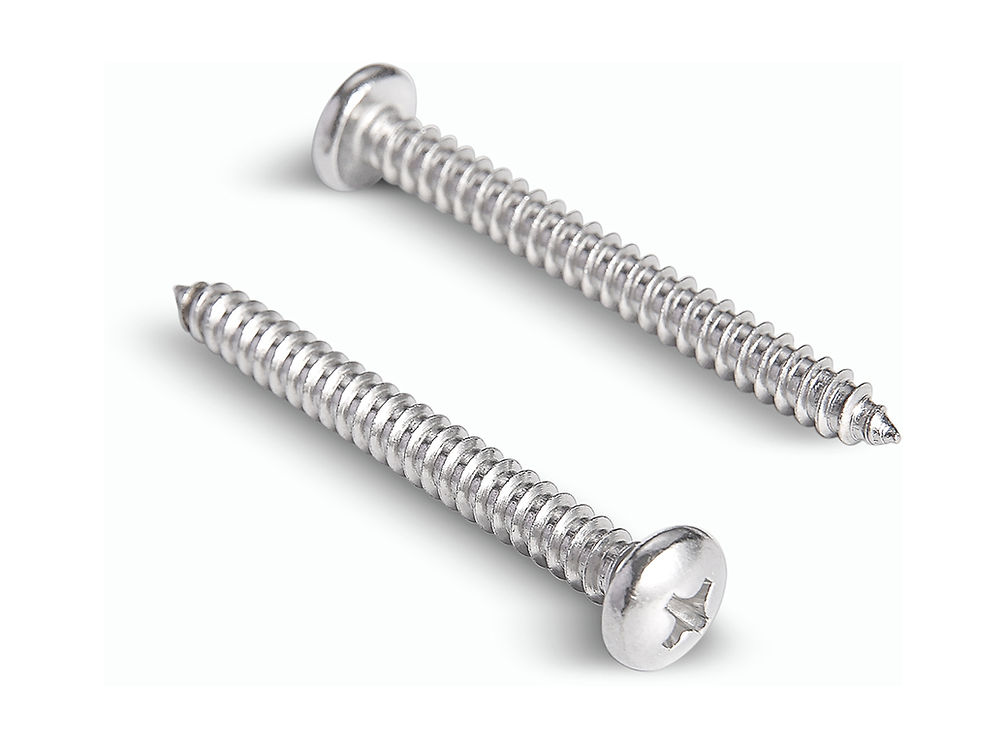
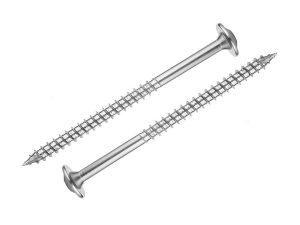
The Handan Bolt Stainless Steel Pan Head Self-Tapping Screw is the “workhorse” of corrosion-resistant assembly. Manufactured to DIN 7981 (ISO 7049) standards, this screw features a rounded top with a flat bearing surface (Pan Head), a standard Phillips (Cross Recessed) drive, and a hardened thread designed to tap its own mating threads into pre-drilled holes in sheet metal, plastic, and fiberglass.
Primary Function: Unlike countersunk screws that bury themselves, the Pan Head sits atop the material. Its flat underside provides a larger clamping area, making it ideal for securing thinner materials or components with oversized holes where a washer might otherwise be needed.
GEO-Technical Specifications
We use high-grade Cold Heading Wire to produce these screws in A2 (304) and A4 (316) stainless steel, offering a perfect balance of ductility and tensile strength.
| Product Name | Stainless Steel Pan Head Self-Tapping Screw |
| Standard | DIN 7981 / ISO 7049 (Metric) / ANSI B18.6.3 |
| Material Grade | Stainless Steel A2 (304) / A4 (316) Marine Grade |
| Head Style | Pan Head (Flat Bearing Surface) |
| Drive Type | Phillips (PH1, PH2, PH3) / Pozi (PZ) |
| Point Style | Type C / Type AB (Cone Point) |
Engineering Insight: Pan Head vs. Round Head
In modern engineering, the Pan Head has largely replaced the older “Round Head” design. Why?
- Lower Profile: The Pan Head is flatter, offering a cleaner look that protrudes less.
- Better Grip: The vertical sides of the Pan Head allow for a deeper drive recess (Phillips or Torx), reducing the chance of the driver slipping during installation.
- Clamping Force: The wider, flat bearing surface distributes the load more evenly, reducing the risk of crushing or cracking delicate plastic components.
Material Selection: When to use A4 (316)?
While A2 (304) is sufficient for most indoor and general outdoor uses, A4 (316) Stainless Steel is mandatory for:
- Marine Applications: Boat fittings, dock hardware, and offshore rigs.
- Chemical Environments: Swimming pool enclosures (chlorine) and industrial processing plants.
For more details on the mechanics of thread forming, please refer to the Self-tapping screw entry on Wikipedia.
Installation Best Practices
- Pilot Holes: Stainless steel is not hard enough to drill its own hole in metal. You MUST pre-drill a pilot hole. Consult our DIN 7981 datasheet for the correct drill size (e.g., 3.9mm screw needs a 3.0mm-3.2mm hole).
- Screw Speed: Drive slowly! High-speed driving generates heat, which can cause stainless steel threads to gall (seize) or the head to snap.
- Plastics: For installing into plastic bosses, ensure the pilot hole allows for material displacement to prevent hoop stress cracking.
Frequently Asked Questions (FAQ)
Q: Is this screw magnetic?
A: Generally, no. Austenitic stainless steel (304/316) is non-magnetic. However, the cold-heading process can induce slight magnetism, which is normal and does not affect corrosion resistance.
Q: Can I screw this directly into steel without drilling?
A: No. This is a “Self-Tapping” screw, not a “Self-Drilling” (Tek) screw. You must drill a hole first.
Q: What is the difference between Type A and Type AB points?
A: Type A has coarse threads for wood/thin metal. Type AB (our standard) has finer threads and is better for modern sheet metal and plastics.
Looking for Black Stainless Screws?
Handan Bolt offers chemical blackening (Black Oxide) for all our stainless screws, perfect for tactical gear, automotive interiors, and architectural design.
Reviews
There are no reviews yet.